| Introduction | HTML Video | Link |
In our Digital Techonology (DT) courses, we learnt to utilize some HTML and CSS codes that can help make a website and use detailed depiction to inform the readers about what you want to express. For example, there are a lot of sections of HTML and CSS that make the website presentable and attractive. The website in the table above is the first website I made in class about the basic information and understanding about HTML and CSS, their function and uses, and how they contribute to making a presentable website.
Now, let's dive into the sea of history!
The ancient world produced cruel, vicious, and merciless weapons. In addition to being exceptional, they also demonstrated a high degree of historical critical and analytical ability.
Some Ancient Weapons Include:
Prehistoric weapons were inherently crude and simple due to several factors. Firstly, early humans did not possess advanced knowledge or tools to craft complex weaponry. Limited technological advancements and scarce resources necessitated the use of locally available materials, such as rocks, sticks, and animal bones, to create weapons. This often resulted in crude designs that could only deliver minimal force or relied on brute strength. Moreover, early humans lacked the accumulated knowledge, experience, and cultural development that would facilitate the refinement and sophistication of weaponry. The prehistoric era witnessed humans' gradual understanding of their environment and the development of more elaborate tools. Nevertheless, the simplicity and crudeness of prehistoric weapons were a consequence of the technological limitations and resource constraints that shaped early humans' evolutionary journey.
The Roman Empire was formed when Augustus Caesar became the sole ruler of Rome in 27 BCE. He and his successors tried to preserve the appearance of the Roman Republic, but they also built monumental structures and expanded the empire through conquests.
The success of the Roman Empire can be attributed to several factors. First, the Romans had a well-organized and efficient administrative system that allowed them to govern their vast territories effectively. They implemented a centralized government with officials appointed to manage various aspects of the empire, ensuring law and order were maintained. Additionally, the Romans had a strong military that was skilled and disciplined, enabling them to conquer and defend their territories. They also had an extensive and well-maintained road network, facilitating trade and communication throughout the empire. Furthermore, the Romans were known for their engineering prowess, building impressive structures and infrastructure that showcased their technological advancements. Finally, the Romans were skilled at assimilating and incorporating conquered peoples into their empire, allowing for cultural, economic, and technological exchange, which contributed to the empire's growth and stability. Ultimately, it was a combination of effective governance, military strength, infrastructure, technological advancements, and cultural assimilation that made the Roman Empire so successful.
The ancient Romans wore a variety of armor to protect themselves in battle. One of the most common types was the lorica segmentata, a segmented plate armor made of iron strips that provided flexibility and protection. They also used lorica hamata, a chainmail armor made of interlocking iron rings, which was lighter and more flexible but offered less protection. Additionally, Roman soldiers utilized helmets such as the galea, which covered the head and had cheek guards for extra protection. These types of armor allowed the Romans to defend themselves effectively on the battlefield.
The Roman Army was renowned for its strategic brilliance and effective use of tactics on the battlefield. One of their most effective tactics was the "Testudo" or tortoise formation, where soldiers would raise their shields above their heads and interlock them to form a protective barrier against arrows and projectiles. This formation allowed the soldiers to advance towards the enemy while minimizing casualties. Additionally, the Romans employed the use of the "Triplex Acies" or triple line formation, consisting of three lines of soldiers. The first line would engage the enemy, while the second and third lines provided support and reinforcements. These tactics, along with disciplined training and organization, contributed to the Roman Army's dominance on the battlefield.

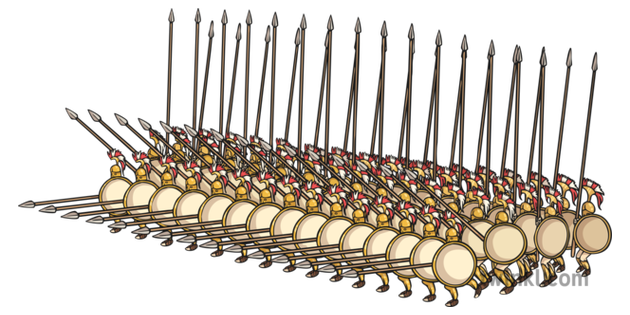
The majority of Ancient Greece was made up of numerous city-states, each with its own set of rules, laws, and rulers. But these little city-states were compelled to come together under Alexander the Great in the 300s B.C. The Ancient Greek Empire, which included Egypt, South-West Asia, and Europe, was founded by him.
Some of the States of Ancient Greece Includes:
The Greek word for shield, hoplite, was used to refer to heavily armored warriors. Because they could only afford to purchase a shield and other pieces of armor, only the wealthy could be hoplites. Every hoplite had a shield with them. Despite not having an official uniform, the hoplites wore armor that was comparable. Athenians carried shields bearing a huge letter A, while Spartan hoplites were distinguished by their red garments. Additionally, hoplites wore breastplates and back plates known as cuirasses, which were typically, though not always, composed of bronze. To safeguard the bottom portion of his legs, they additionally donned bronze leg guards known as greaves. A bronze helmet, frequently adorned with a horse hair crest, served as the last touch.
The ancient Greek empire displayed an array of tactics that allowed them to conquer and maintain a vast empire. One of the most prominent strategies employed by the Greeks was their exceptional use of military formations, such as the phalanx. This formation, comprised of heavily-armed infantry, utilized overlapping shields and long spears to create an impenetrable wall of defense while being able to advance and attack as a cohesive unit. The phalanx gave the Greeks a significant advantage in battle, as it maximized their collective strength and eliminated any individual weakness. Additionally, the Greeks demonstrated tactical flexibility by adapting to different terrains and opponents. They relied on a variety of forces, including cavalry and naval fleets, to effectively combat different enemies in land and sea battles. Furthermore, the Greeks employed psychological warfare to demoralize their adversaries. Through the use of intense battle cries and intimidating appearances, the Greeks instilled fear in their opponents, often gaining the upper hand before the fighting even began. These tactical approaches, combined with their superior weaponry and disciplined troops, allowed the ancient Greek empire to establish and maintain their dominance for centuries.
Located in northern Africa, ancient Egypt is a civilization that emerged in the fourth millennium BCE. As new archeological discoveries reveal more of its mysteries, the intrigue around its great accomplishments—preserved in its art and monuments—only intensifies.
The Most Common Weapons Utilized by the Egyptian Army includes:
The ancient Egyptians employed a variety of tactics to secure their flourishing civilization and maintain their power. One prominent tactic was their military strategy, which included the organization of a well-trained army equipped with advanced weaponry such as chariots and bows. Additionally, they utilized diplomatic tactics to form alliances and establish trade relations with neighboring civilizations. The construction of monumental architecture, such as temples and pyramids, served as a tactical display of power and divine authority. Moreover, the ancient Egyptians employed sophisticated agricultural tactics, such as irrigation systems, to ensure a stable food supply, further contributing to the success and longevity of their civilization.

The Battle of Kadesh (1275 BC) took place in Syria, southwest of Ḥimṣ, on the Orontes River. It was a significant conflict between the Egyptians led by Ramses II and the Hittites led by Muwatallis. Pharaoh Ramses II attempted to take Syria from the Hittites and retake the Hittite-held city of Kadesh in one of the greatest chariot fights in history, which took place alongside the Orontes River. Approximately 5,000 chariots charged into the battle, resulting in a day of devastation, but no clear winner. The conflict resulted in the first-ever peace treaty in history.
Middle Ages, the period in European history from the collapse of Roman civilization in the 5th century ce to the period of the Renaissance.
Medieval weapons represented a significant evolution from ancient weaponry due to technological advancements and strategic innovations. Compared to ancient weapons, such as spears and bows, medieval weapons exhibited superior craftsmanship and design, primarily driven by the introduction of iron and steel. These metals enabled the production of stronger and more durable weapons, such as swords, maces, and axes. Furthermore, advancements in armor and protective gear, such as knights' plate armor, shields, and chainmail, offered enhanced protection for soldiers in combat. The progression in medieval weapons not only transformed the dynamics of warfare but also influenced the formation of new battle tactics, strategies, and the importance of skilled knights.
The origins of medieval knights can be traced back to the early Middle Ages, a time when Europe was characterized by constant warfare and the need for highly skilled warriors. Initially, knights emerged as mounted warriors who were granted land in exchange for their military service. They were essentially noble-born soldiers who underwent extensive training in combat, horsemanship, and chivalry. Over time, knights became a distinct social class within medieval society, embodying the values of courage, loyalty, and honor. Their role expanded beyond combat, as they became protectors of the weak, upholders of justice, and symbols of social status and prestige.
Some Weapons Include:
Armor Knights Wear Include:
The Battle of Agincourt is an iconic moment in English military history. On 25 October 1415, an army of English raiders under Henry V faced the French outside an obscure village on the road to Calais. Humble English archers defeated the armoured elite of French chivalry, enshrining both the longbow and the battle in English national legend.
The English triumph in the Battle of Agincourt can be attributed to several crucial factors. First and foremost, the exceptional leadership and military tactics employed by King Henry V played a pivotal role. Henry’s strategic decision to position his long-bowmen, armed with their powerful longbows, at the forefront of his army effectively neutralized the heavily armored French knights. The accuracy and long-range capabilities of the English longbows proved to be a game-changer, causing significant casualties among the French army even before they could reach the English lines. Additionally, the unfavorable terrain, with its narrow and muddy battlefield, greatly hindered the French cavalry, rendering their charges ineffective. The topography of the battlefield, combined with heavily armored French soldiers, also resulted in the French army becoming densely packed, leaving little room for them to maneuver and reducing their effectiveness. Lastly, the English army’s high level of discipline and cohesion, coupled with their relentless determination and fighting spirit, played a crucial role in their victory. Despite being significantly outnumbered, the English soldiers fought valiantly and resisted the French attacks throughout the battle. Overall, the triumphant outcome of the Battle of Agincourt can be attributed to the exceptional leadership of Henry V, the dominance of the English long-bowmen, the unfavorable battlefield conditions for the French, and the unwavering determination of the English soldiers.
During a battle, the purpose of castles is primarily defensive. Castles were strategically designed and strategically placed to provide a secure stronghold for military forces. They acted as fortified structures, offering protection to the defending army and serving as a base for operations. Castles were equipped with high walls, towers, and other defensive features such as moats and drawbridges, making them difficult to penetrate by the enemy forces. They provided a vantage point for archers and soldiers to launch attacks, while offering a refuge for the defenders during sieges. Furthermore, castles served as a symbol of power and authority, instilling fear and intimidation in the enemy forces. Overall, castles played a crucial role in battles as they ensured the safety of the defending army, enabled effective defensive strategies, and acted as a symbol of strength and supremacy.
The features of a castle include curtain walls, round towers, moats, motte and bailey, arrow loops, murder holes, concentric walls, square keep, manor house, drawbridge, main gate, and much more. These features of a castle serve as both attacking and defending purposes. This can benefit the army of th castle in a lot of ways.
Between 1066 and 1485 more than 1,500 castles were built! They got better and better as time went on. After 1085, people began to build stone 'keeps', to stop attackers burning down the walls. After 1180, defenders built round towers, to stop attackers who tried to mine under the corners. After 1200, defenders built a stone 'curtain wall' around the bailey. After 1270, castles were built with two walls; (they were called 'concentric castles'). And after 1300, buildings called 'barbicans' were built to defend the gates (the weak part of a castle). But no castle wall could stop cannons. So after 1450 people went to live in 'manor houses'.

Gunpowder, a discovery that fundamentally altered the course of human history, was invented by Chinese alchemists during the Tang Dynasty, around the 9th century.
Gunpowder, an explosive mixture of sulfur, charcoal, and potassium nitrate, has become renowned for its immense effectiveness in warfare and weaponry. The reasons behind its effectiveness lie in its unique properties and the devastating impact it has on the battlefield. Firstly, gunpowder's ability to rapidly combust and release substantial amounts of energy upon ignition make it an efficient propellant for firearms, enabling projectiles to be propelled at high speeds. This quality grants gunpowder-based weapons a significant advantage, as they possess the ability to strike enemy forces accurately and from unprecedented distances. Moreover, gunpowder's explosive nature lends itself to a wide range of military applications, such as grenades, bombs, and landmines, amplifying firepower and causing extensive damage to both human life and infrastructure. Additionally, gunpowder's accessibility and relative simplicity of production have contributed to its effectiveness, allowing its utilization by various civilizations throughout history. Finally, the psychological impact generated by the sight and sound of gunpowder-based weapons adds to their effectiveness, instilling fear and terrorizing opponents, ultimately leading to demoralization and surrender. In conclusion, the amalgamation of gunpowder's explosive capabilities, versatility, accessibility, and psychological impact all contribute to its unparalleled effectiveness, making it a formidable force in the world of warfare.

Gunpowder, without a doubt, has proved to be an instrumental component in battles throughout history. Its importance lies in its ability to alter the course of warfare by providing a means to inflict mass devastation upon an enemy. With its explosive power, gunpowder has facilitated the creation of various weapons like cannons, muskets, and eventually modern firearms, revolutionizing the way battles are fought. By enabling the launch of projectiles at high speeds, gunpowder has significantly increased the range, accuracy, and destructive capabilities of warfare, forever leaving its mark on the history of battles.
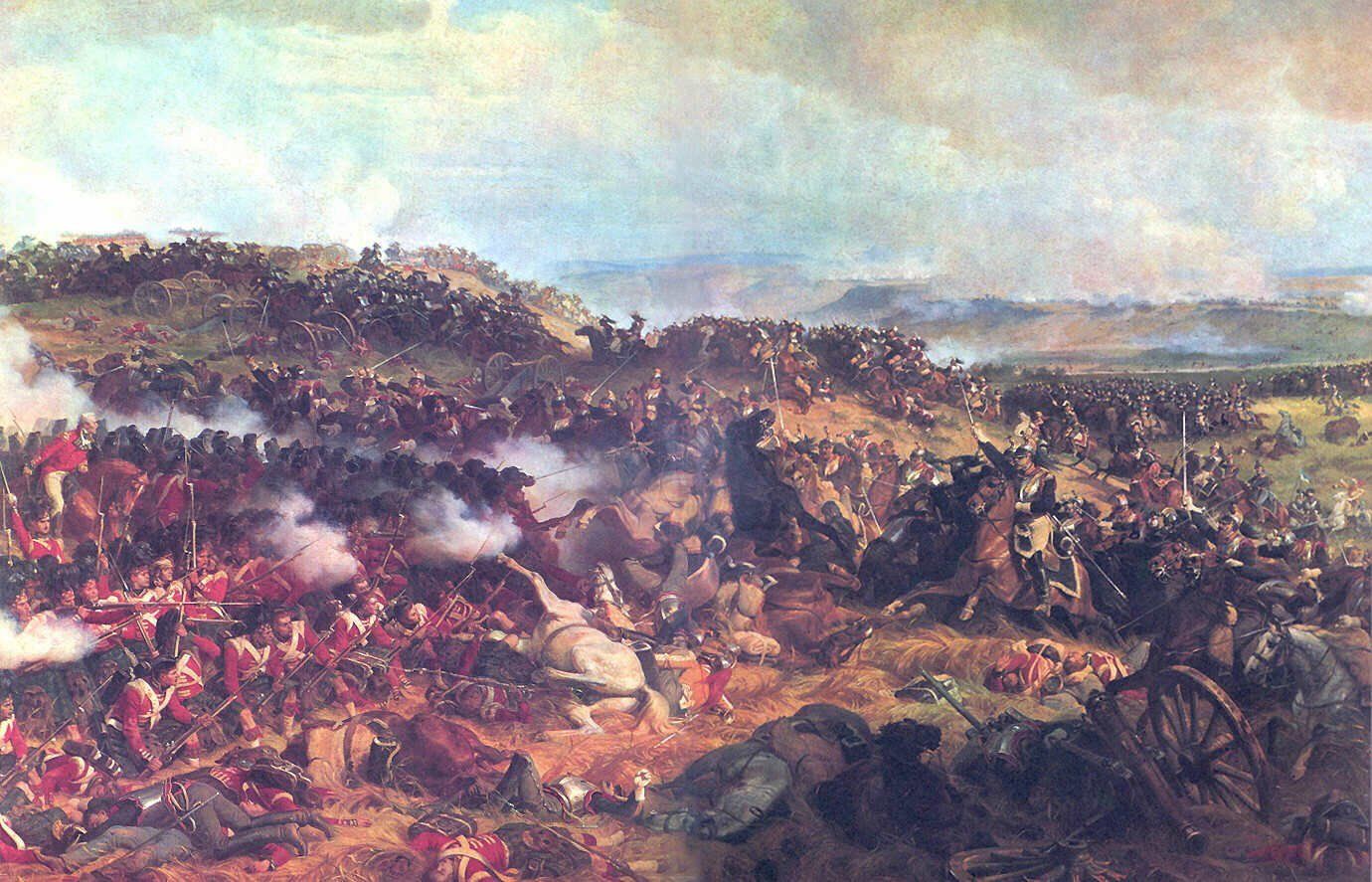
The Battle of Waterloo is a battle fought on June 18, 1815, near the village of Waterloo (in what is now Belgium), in which Napoleon's army was defeated by the British (under the Duke of Wellington) and Prussians. The allied pursuit caused Napoleon's army to disintegrate entirely, ending his bid to return to power.
After four attempts by the French to breach the allied army's center, Napoleon was forced to rearm in order to counter a flanking attack. In the middle of the allied line, a farmhouse was taken by a French regiment, but Napoleon declined to dispatch more troops. The duke of Wellington's men moved against the French after repelling their last attempt at attack, sending them into a disorderly retreat.
The origin of World War I can be traced back to several interconnected factors that escalated tensions between Europe's major powers in the early 20th century. One of the key catalysts was the complex system of alliances that had been established among European nations, creating a delicate balance of power. Additionally, the intense competition for colonies and resources, particularly in Africa, coupled with the rapid militarization of nations, added to the mounting hostilities. The assassination of Archduke Franz Ferdinand of Austria-Hungary in June 1914 by a Serbian nationalist provided the spark that ignited the war, as complex chains of events ensued, ultimately leading to a full-scale global conflict. The war marked a turning point in world history, reshaping politics, altering national borders, and laying the foundations for future conflicts and the emergence of new geopolitical dynamics.
WW1 was Divided into the Following 2 Groups:
World War I had a profound and far-reaching impact on the world, shaping it in ways that would be felt for decades to come. The war resulted in the loss of millions of lives, leaving a trail of death and destruction across Europe. It shattered empires, redrew national boundaries, and gave rise to new nations. Economically, the war destabilized global markets, leading to inflation and unemployment. The war also led to significant advancements in technology, particularly in weaponry and communication. Moreover, it set the stage for future conflicts and tensions that eventually led to World War II. Socially, the war brought about a change in gender roles, as women had to assume responsibilities traditionally held by men while they were away at the frontlines. The war also led to a general sense of disillusionment and a loss of faith in traditional institutions, as the horrors of trench warfare were revealed to the world. Overall, World War I fundamentally altered the political, economic, and social landscape of the world and set the stage for a new era of uncertainty and conflict.
By Christmas, both sides thought the battle would be ended. Rather, it lasted four years and claimed 16, 000, 000 lives. The kind of combat employed, chiefly in the trenches, was one of the factors contributing to the war's protracted duration. To defend themselves from the destructive firepower of heavy artillery and machine guns, both sides dug trenches. These ditches would later get increasingly complex.
The First World War began in 1914. It lasted until 1918. On one side were Britain, France and Russia. On the other side were Italy, Germany, and Austria-Hungary. The war started because all the powerful European countries wanted large empires and made alliances with each other. They also built up huge armies and saw war as the only way to keep their power. At the start of the war Germany quickly invaded France and Belgium but they were stopped before they reached Paris. The Germans then dug trenches to help them defend the land they had captured. When the British and French armies failed to successfully attack the German trenches, they too dug in to protect themselves. The line of fortifications stretched from the English Channel all the way to Switzerland. The area in between the two lines of trenches was called no man’s land. Over the next few years both sides would try to attack each others' trenches with huge numbers of soldiers, but without success. This was because trenches were easy to defend and hard to attack. This led to the war being called a stalemate, meaning that neither side could win. New weapons were needed in order to find a way for either side to win.

The origins of World War II can be traced back to a complex web of political, economic, and ideological factors that emerged in the aftermath of World War I. The harsh terms imposed on Germany through the Treaty of Versailles, coupled with the economic hardships of the Great Depression, created a fertile ground for the rise of extreme nationalist and fascist ideologies across Europe. As Hitler's Nazi regime gained power in Germany, it embarked on an aggressive expansionist policy, violating the terms of the Treaty of Versailles. The signing of the Nazi-Soviet Non-Aggression Pact in 1939 further set the stage for the outbreak of war, as it allowed Hitler to conquer Poland without interference from the Soviet Union. The invasion of Poland by Germany in September 1939 marked the official beginning of World War II, as it prompted immediate declarations of war from Britain and France, who had pledged to defend Poland's sovereignty.
World War II brought significant changes and impacts across the globe. Economically, the war spurred industrialization and technological advancements as countries ramped up production to meet the demands of the conflict. This led to the emergence of new industries and the transformation of existing ones. Socially, the war reshaped societies, especially for women who entered the workforce in unprecedented numbers, challenging traditional gender roles. Additionally, the war led to the mass displacement of people, including millions of refugees and prisoners of war, creating significant humanitarian challenges. Politically, World War II resulted in the reconfiguration of global power dynamics, leading to the rise of the United States and the Soviet Union as superpowers, while weakening the old colonial powers such as Britain and France. The war also exposed the atrocities of genocide with the Holocaust, leading to the establishment of the United Nations and a global commitment to human rights and justice. Ultimately, World War II had far-reaching changes and impacts, shaping the world we live in today.
World War II was a time of unparalleled destruction and despair, characterized by widespread conflict, mass casualties, and extraordinary human suffering. Spanning from 1939 to 1945, this global conflict involved almost every nation on Earth, reshaping the geopolitical landscape and leaving an indelible mark on history. Fueled by aggressive ideologies, territorial ambitions, and bitter resentments, WW2 brought devastation on an unprecedented scale, with cities reduced to rubble, landscapes scarred by warfare, and countless lives tragically lost. The war saw the emergence of new weapons technology, including devastating air raids, powerful tanks, and the horrific atomic bombs, which added a new level of destruction and horror to the human experience. Beyond the physical toll, the war witnessed unimaginable human suffering, with countless individuals subjected to persecution, forced labor, genocide, and the Holocaust that targeted millions of innocent lives. Despite the darkness and horrors that overshadowed this era, WW2 also saw nations aligning for a cause, demonstrating the resilience, bravery, and unity of people facing a common enemy. The aftermath of WW2 led to profound changes in the world order, the establishment of international organizations such as the United Nations, and the ongoing efforts to ensure global peace and prevent the repetition of such atrocious events.
Throughout the prehistoric, medieval, and modern era, wars shaped the course of history, leaving lasting scars on the collective memory of humanity. From the blood-soaked battlefields to the grandiose castles, this tumultuous period witnessed both the pinnacle of human artistry and the brutality of conflict. While wars brought forth devastation and suffering, they also fostered innovation, leading to advancements in weaponry, fortifications, and strategies. However, as we reflect upon this era, it becomes apparent that wars were ultimately futile endeavors, often fought for trivial reasons or to satisfy those hungry for power. The era of knights and castles may have come to an end, but the lessons we have learned from these wars are timeless. It is now our responsibility to strive for peace, to bridge divides, and to prevent the repetition of the mistakes of the past, for it is only through unity and understanding that we can transcend the dark chapters of history and work towards building a brighter and more harmonious future for all.